
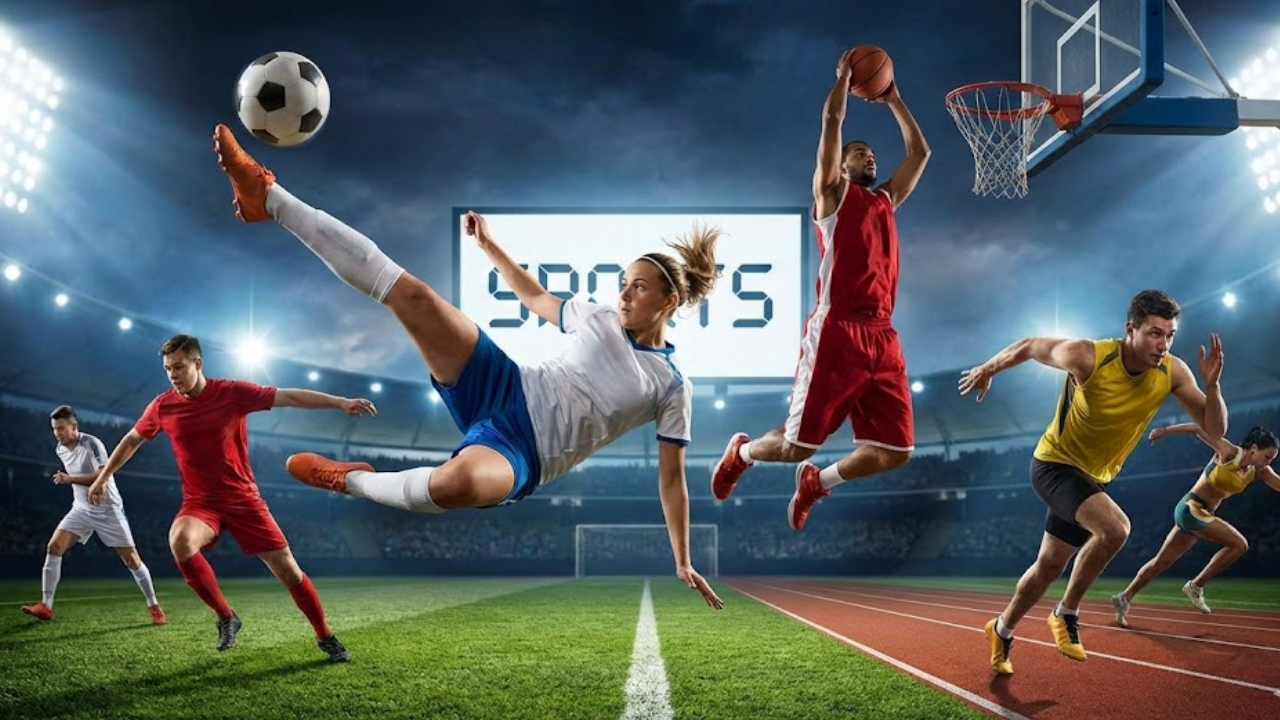
Sports and their connection to the development of human civilisation date back to early civilisations, surviving because competition was one way to stay alive. It was basically competitions between human beings as to who was the strongest or fast or slowest in their peer group. The development of a semi-competitive sport into the regional and international sports of today is a powerful cultural, social and economic force. They are best known as a tool of physical fitness, but they also signify teamwork, discipline, entertainment and national integrity. I believe Games help build a way of life, inspire, and motivate young kids and make the world smaller as we share commonalities despite our language, religion, and geography.
India has a distinct place in the sports world. Although there have been many traditional games that have been popular in India for centuries, and although the origins of sports are tied to the culture of the country, traditional sports have been influenced and shaped by the introduction of modern sports by foreign influences. This means that, in order to understand the importance of sports within Indian culture, it is very important to know and understand the history of sports and how they developed within India.
What Are Sports?
Sports are the definition of organised physical activity (competition) which requires skill, competition, rules and physical exertion. It may be played by individuals or teams and is either recreational or professionally held. It not only increases an individual’s overall health, but also improves the strength of the individual, how well the individual can establish relationships with other individuals, and how well individuals work together as a team. Additionally, many athletes from both national and international levels have found careers in sports and the recognition of their ability in Sport.
Also Read- Shimla Travel Guide: Best Time to Visit Shimla
Origin of Sports in Ancient Civilisations
The history of traditional games can be traced back thousands of years, with evidence from archaeology supporting the existence of physical combat in every known ancient culture.
Physical Activity in Prehistoric Societies
The earliest sports-like activities were created for survival. The act of hunting and gathering food for nourishment (the”hook”) as well as using your body (the”line”) to gather and create fire.
Sports in Ancient Egypt
The first organised sports were found in Ancient Egypt as they were depicted on ancient Egyptian wall paintings and carvings, along with other evidence. Some of the most notable forms of organised sports found include wrestling, hunting, rowing, swimming and weight lifting. Many of the organised sports from Ancient Egypt were linked to military disciplines or to the celebrations of religious festivals.
Sports in Ancient Greece
One of the most important events in formalising our sporting culture was created by the Ancient Greeks. The Ancient Greeks were highly developing their physical and mental training philosophies. In addition to physical and mental training, these Training or Academy Events ultimately developed into regular or organised competitions.
The earliest recorded organised competition was held in Olympia, Greece, in the year 776 B.C.E. The events of the Olympic Games included running, wrestling, boxing, the racing of chariots, and the throwing of the javelin. It was believed that all of these sports were tied to respect, discipline and being the best or “honouring the gods”. Through the modern Olympic Games, this event became one of the largest and most well-known events in the world today.
Sports in Ancient Rome
The Romans took over the Greek sports, but spiced them up with much more entertainment. Everyone adored gládiator fights, chariot races, and any kind of combat sports. Roman sports, compared to Greek ones, had less emphasis on preparation for physical education.
Sports in Ancient China
In China, sports also have a long history. Sports such as martial arts, archery, dragon boat racing, and early football (Cuju) were played. Such sports were directly related to discipline, balance and the improvement of the spirit.
Evolution of Sports in the Medieval Period
Sports in the medieval period further many across the world. The noble and wealthy folk of the time underwent training in Europe to prepare themselves for tactical and military approaches that often involved jousting, fencing, hunting and horse riding. Among the common people’s folk games, wrestling and ball games were popular.
ADVERTISEMENT Traditional sports in Asia included martial arts, wrestling and archery. The sporadic nature of sports was tied to warfare training, festivals, and royal patronage.
Modern Sports and Global Standardisation
The transition into the modern era represented a turning point for sports. Impacts of the Industrial Revolution included urbanisation, structured leisure time and the formation of clubs and associations. There was uniformity of rules and formation of sports federations.
Various sports, such as football and cricket, established codified rules and administrative structure in the latter half of the nineteenth century. Translation of international competitions has introduced a more international and professional aspect.
Introduction of Sports in India
India is known for its ancient sports history, rich in culture. Indians indulged in several games and physical fitness activities starting centuries ago,o and well before the modern games made their mark.
Traditional Sports in Ancient India
Sports had become an intrinsic element of Indian society, as confirmed by ancient Indian texts and historical records.
Some traditional Indian sports include:
- Wrestling (Kushti)
- Archery
- Chariot racing
- Horse riding
- Mallakhamb
- Kabaddi
- Kho-Kho
Epics like the Ramayana and Mahabharata mention archery, mace fighting, and wrestling. These sports were considered essential for physical strength, discipline, and warrior training.
Also Read:- Gastonred: An Online Sports Gambling Platform
Role of the British in Introducing Modern Sports in India
Modern sports were formally introduced in India during British colonial rule. The British used sports as a recreational activity and a tool for social structure. The British Raj played a significant role in shaping India’s modern sports culture.
During British colonial rule, India was introduced to modern sports. Sports helped structure society, but they were also a leisure activity for the British. The Modern History of Sports in India, which is much influenced by the British Raj
Cricket in India
Cricket is one of the better-known BJ sports. Cricket was first played in India by British officers and affluent Indians, but it gradually gained a wide range of popularity across the country. Gradually, Indians learnt the game and owned it.
Now cricket is not only a game for India, but it is also an emotion, a unifier and a mega industry.
Football and Hockey
It was spread by British schools, colleges and army regiments. It originated in regions such as Bengal, Goa and Kerala.
Hockey also prospered during the time of British rule. From the early 20th century onward, however, India became a powerhouse in hockey, claiming several Olympic medals.
Games Introduced By The Colonial Rules
These were the other sports that came about in this period:
- Tennis
- Badminton
- Boxing
- Athletics
Sports that were once only available to clubs and institutions were soon common with the masses.
Growth of Sports in Independent India
After independence in 1947, India began focusing on developing sports as part of national growth.
Government Support and Sports Institutions
The Indian government established sports authorities, training centres, and national federations. Schools and universities promoted sports through competitions and scholarships.
Institutions like the Sports Authority of India helped identify and train young talent across various sports disciplines.
India on the Global Sports Stage
India gradually expanded its presence in international sports. While cricket remained dominant, other games like badminton, boxing, wrestling, shooting, and athletics gained recognition.
Indian athletes started winning medals at global events, inspiring a new generation to pursue sports professionally.
Popular Sports in India Today
India is now a diverse sports nation with an interest in multiple disciplines.
1. Cricket
Cricket remains the most followed sport in India. Domestic leagues, international matches, and grassroots programs continue to strengthen the sport’s popularity.
2. Football
Football has seen rapid growth in recent years, supported by leagues, academies, and international exposure.
3. Hockey
Hockey remains India’s national sport in spirit, with renewed efforts to regain global dominance.
4. Emerging Sports
Sports like badminton, kabaddi, wrestling, and athletics have gained massive popularity due to international success and professional leagues.
Importance of Sports in Modern Society
Sports play a crucial role in shaping individuals and societies.
1. Physical and Mental Health
Sporting activity is important for keeping fit, feeling relaxed and having a healthy mind.
2. Character Building
We learn discipline, teamwork, leadership and resilience through sports. All of these traits extend far beyond the surface of competition.
3. Economic Impact
Sports lead employment, tourism, media and sponsorship, thus contributing to the economy.
4. Social Unity
Sports are by far one of the few things that are played in almost every culture and region without any limitations or prerequisites due to the geographical background of an individual. The big sporting events create national pride and strengthen the national identity.
Future of Sports in India
India has bright prospects in sports. Changes are being driven by upping funding, improved infrastructure, digital exposure and awareness. The key areas of focus include grassroots development, school-level training and player identification.
But through continuous encouragement and preparation, India could evolve into a superpower in sports, not only in cricket but also in other areas in the world.
Conclusion
The journey of sports from primitive survival activities to witnessed global competitions has been a long one. It is almost inherent in how we navigate the world a tendency to pursue physical perfection, challenge each other, and amuse ourselves. Sports in India have prevailed from ancient tradition to modern international, which we are enjoying before us through cultural expression and colonial impact.
Sports are no longer just a game but a medium for health, unity, and national development. India is still learning to wear sports at all levels, so Sports at all levels will play an important role in future generations.